Regional Shifts in Progressive Reel Mechanics: How Austrian Regulations Shape Mobile Jackpot Structures
Sage Patterson · Aug 21, 2026
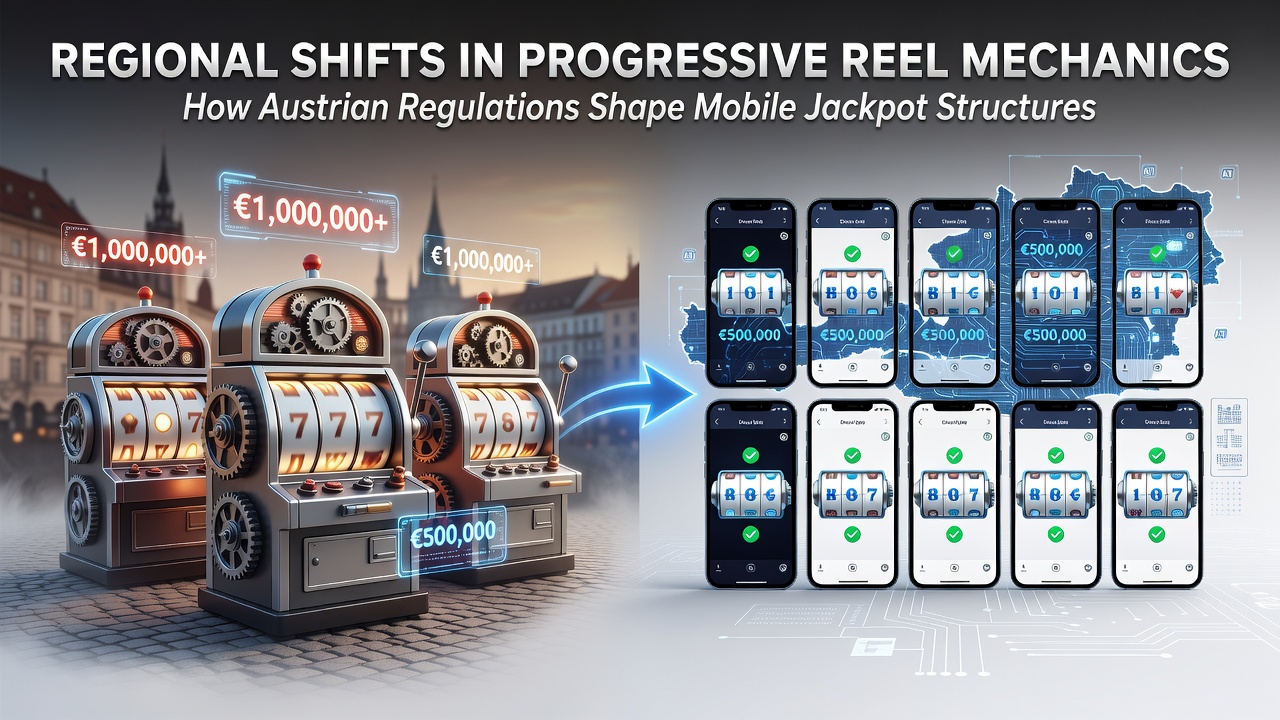
Regional Shifts in Progressive Reel Mechanics: How Austrian Regulations Shape Mobile Jackpot Structures
Progressive reel mechanics in mobile slots have undergone notable adjustments across European markets, and Austrian regulations play a central role in these developments. The framework established under the Austrian Gambling Act requires operators to maintain specific contribution caps on jackpot pools while ensuring that reel sequences remain transparent and verifiable on mobile platforms. These rules influence how progressive multipliers accumulate and trigger, particularly in games designed for handheld devices where session lengths and network conditions vary widely.
Regulatory Foundations and Their Direct Impact
Austrian authorities enforce contribution limits that cap the percentage of each bet directed toward progressive jackpots at levels lower than those permitted in several neighboring jurisdictions. This cap forces developers to recalibrate reel weighting algorithms so that base game payouts compensate for reduced jackpot growth rates. Data from industry monitoring shows that mobile titles released after 2024 incorporate shorter reel cycles and more frequent mini-progressive triggers to sustain player engagement without breaching contribution thresholds. Observers note that these mechanical tweaks appear consistently in titles licensed for the Austrian market but less frequently in versions distributed elsewhere in the European Union.
August 2026 marks the scheduled enforcement date for updated technical standards concerning mobile RNG certification. Under the new guidelines, every progressive reel sequence must undergo independent testing that includes simulated network interruptions common to cellular connections. Compliance requires operators to implement fallback logic that preserves jackpot integrity even when a session drops mid-spin. Research indicates that studios have already begun embedding these protocols into core codebases, resulting in reel mechanics that pause and resume without resetting accumulated progressive values.
Comparative Regional Adjustments
Patterns emerging in other regulated territories highlight the distinctive position of Austrian rules. While Canadian provincial frameworks emphasize player fund segregation without strict contribution caps, Austrian standards tie jackpot pool sizes directly to verified local player activity. This linkage encourages the creation of segmented mobile jackpot structures that draw only from Austrian-registered accounts rather than pan-European pools. Figures released by the European Commission reveal a measurable increase in jurisdiction-specific progressive tiers since 2023, with Austria accounting for a disproportionate share of such segmented implementations.
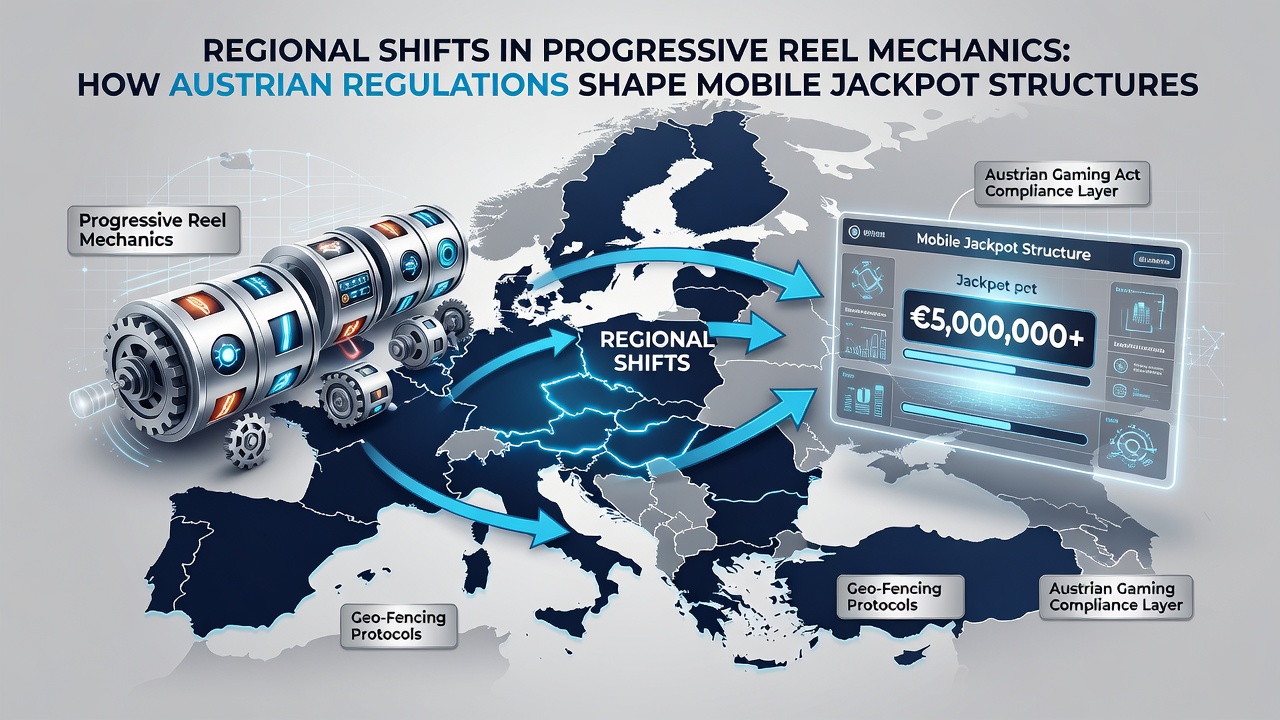
Developers respond by adjusting reel symbol distributions to favor smaller, more frequent wins within the base game. These adjustments maintain overall return-to-player percentages while respecting the lower progressive allocation permitted under Austrian law. Industry reports document that titles adapted for Austrian compliance often feature reel strips containing additional low-value symbols and expanded wild distributions compared with their counterparts in markets without contribution ceilings.
Technical Adaptations in Mobile Environments
Mobile platforms introduce additional constraints that Austrian regulations address explicitly. Touch-based interfaces must display real-time jackpot meters that update without latency spikes, and reel animations must remain synchronized across variable screen sizes. Operators achieve this by shifting progressive calculation logic to server-side processing that pushes only final values to the client. This architecture aligns with Austrian requirements for audit trails and reduces the risk of discrepancies during mobile handoffs between Wi-Fi and cellular networks.
Studies conducted by research institutions in Australia have tracked similar regulatory pressures on reel design, yet the Austrian model adds the requirement that jackpot contributions reset or carry over based on quarterly compliance audits. Such periodic resets compel providers to build modular reel engines capable of switching between local and pooled modes without altering core symbol probabilities. Those who have examined the resulting codebases observe that the modular approach has become standard practice for any studio targeting multiple European licenses simultaneously.
Future Outlook and Market Implications
Market data through mid-2026 suggests continued refinement of progressive reel mechanics as Austrian regulators prepare to integrate additional mobile-specific testing protocols. Operators anticipate that future updates will extend verification requirements to include biometric session controls, further influencing how jackpot eligibility is determined on handheld devices. The cumulative effect points toward increasingly granular reel configurations that respond to jurisdiction rather than uniform global builds.
Conclusion
Austrian regulations have produced measurable shifts in how progressive reel mechanics operate within mobile jackpot structures. Contribution limits, certification timelines, and segmented pooling requirements drive technical adaptations that distinguish Austrian-licensed titles from those in less prescriptive markets. As August 2026 approaches, these patterns are expected to intensify, with reel designs continuing to evolve in direct response to compliance demands.